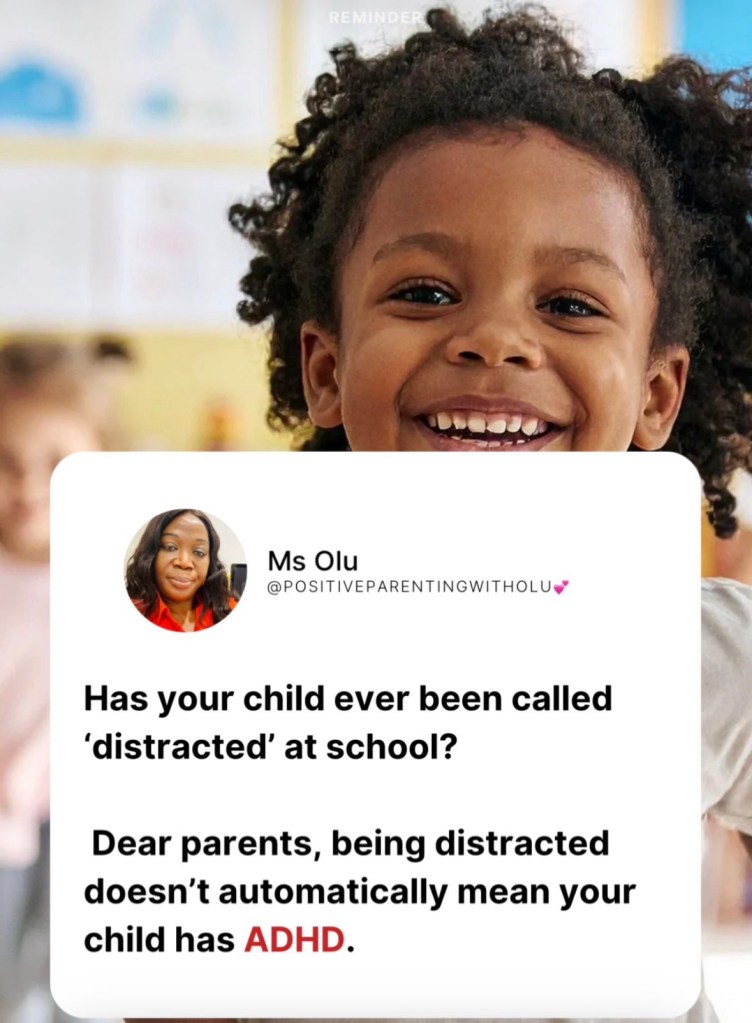
Has your child ever been called ‘distracted’ at school?

 Dear parents, being distracted doesn’t automatically mean your child has ADHD.

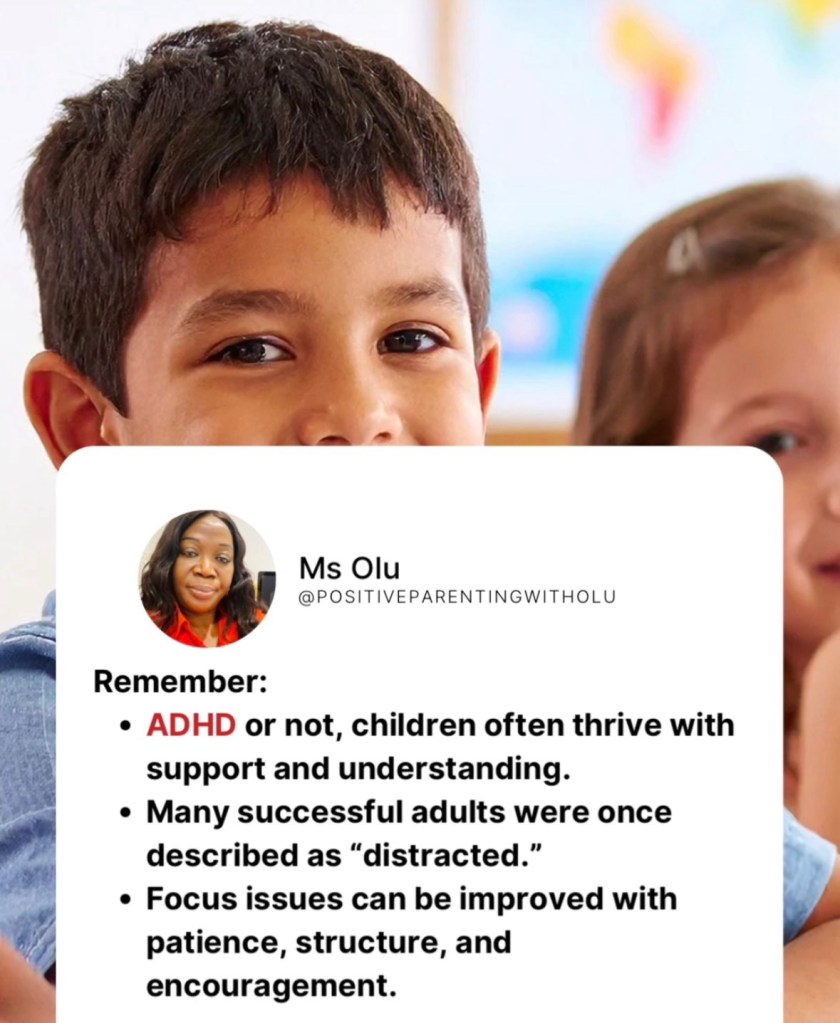
Being “distracted” is not a verdict on the child’s intelligence or future. Many bright 10 year olds struggle with focus at this age. It’s feedback that helps identify what support he needs, not who he is.

2. Separate behaviour from identity
remind your son:
👉 “You’re not a distracted child — you’re a child who sometimes gets distracted.”
This protects his confidence and self-esteem.

3. Ask when and how the distraction shows up
Have a calm conversation with the teacher to understand:

  • Is it during long lessons?
  • Independent work?
  • After break time?
  • Certain subjects?

Patterns matter. Focus issues are often situational, not constant.

4. Look at what’s happening outside the classroom
At 10, boys are dealing with:

  • Big emotional changes
  • Fatigue
  • Screen overload
  • Hunger or poor sleep

Sometimes distraction is a sign of unmet needs, not laziness.

5. Build focus in short, achievable chunks at home
My Advise to you parents is to:

  • Use 15–20 minute focused work periods
  • Give movement breaks
  • Praise effort, not perfection

This trains focus without pressure.

6. Protect the child from adult worry
Children absorb stress quickly. Dear parent, stay calm and hopeful when talking to your son. Fear can shut a child down faster than distraction ever will.

7. Advocate, don’t panic
If the concern continues, suggest:

  • Asking for simple classroom strategies (seating, reminders, check-ins)
  • Monitoring over time before jumping to conclusions

Not every distracted child needs a diagnosis — many just need guidance and structure.

8. In conclusion:

Some of the most successful adults were once the children teachers described as “distracted.”

The Secret to Improving Your Child’s Academic Performance Starts at Home


Dear Parents,

One of the most effective ways to improve your child’s academic performance isn’t found in expensive resources or endless tutoring sessions — it starts at home with a consistent study routine.

Children thrive on structure. When they know when it’s time to study, where it happens, and what is expected of them, learning becomes a habit rather than a battle. A simple daily routine — even 30–60 minutes — can make a huge difference over time.

Just as important as routines are clear expectations. Let your child know what you expect:

  • Homework completed daily
  • Reading every day
  • Revision done before screen time

When expectations are clear, children are less confused and more confident.

But here’s the part many of us forget 👀
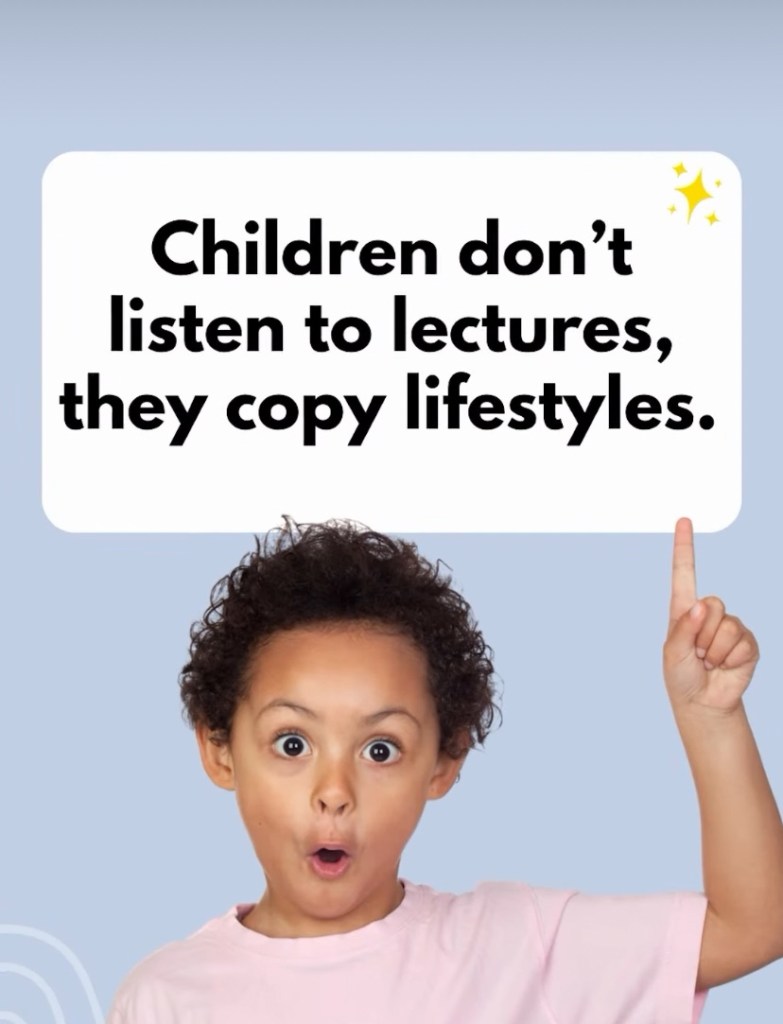
Children don’t do what we say — they do what we do.

If we tell our children to read, but they never see us with a book…
If we tell them to focus, but we’re always on our phones…
The message doesn’t land.

Our children are watching us closely.
They copy our habits, our attitudes, and our priorities.

So ask yourself:

  • Do they see you reading?
  • Do they see you learning something new?
  • Do they see you managing your time well?

You don’t have to be perfect — just intentional.

When parents model discipline, consistency, and a love for learning, children naturally follow.
And that’s when real academic progress begins — not just in school, but for life.

💛

Reading Comprehension Tips for Parents


If your child is in Year 6, they will be sitting their SATs in a few months. One key skill they will be tested on is inference. Here’s how you can support them at home.


What is Inference?

Inference means working out information that is not directly stated in the text by using clues from the text and your own knowledge.


How to Practise Inference at Home

You don’t always need a book—pictures work really well.

Show your child a picture and ask these questions:

  1. Who can you see in the picture?
  2. What is the relationship between these two people? How do you know?
  3. What does the child want to do?
  4. What clues in the picture tell you this?
  5. How is she feeling?
  6. What is the other person currently doing?
  7. Does he know that the girl is behind him? How do you know?

Top Tip for Parents

Always encourage your child to say “because…” when answering. This helps them practise explaining their reasoning, which is essential for SATs success.


Would social services take my child if I smack them?


My sister, let me explain this thing well, because many of us who grew up in Nigeria don’t always understand how different the UK system is.

1. In the UK, smacking is not automatically illegal — but the rules are very strict

Back home, a small slap or tapping a child’s hand is normal.
But here, once you smack a child and it leaves a mark — even a small one — it becomes a safeguarding issue.

Marks like:

  • bruises
  • red patches
  • scratches

Those things can make schools or childcare providers legally obliged to report it. They don’t have a choice.

2. If a smack leaves a mark, you will be investigated

If your child goes to school and the teacher notices something and the child says,
“Mummy/Daddy smacked me,”
that teacher cannot keep quiet.
They must report it to social services.

3. Investigation does NOT mean they will carry your child away

Many of us hear “social services” and our heart just jumps.
But here, investigation doesn’t automatically mean taking your child.
Most of the time, they just want to check:

  • Is the child safe?
  • Was it a one-off mistake?
  • Is everything else okay at home?

They understand parents get stressed. They understand sometimes we react out of frustration.

4. What they are really looking at

They consider:

  • Is this happening all the time?
  • Do you show understanding and are you willing to change?
  • Is the home stable and the child well looked after?
  • Is there any sign of ongoing harm?

If everything else is fine and you’re open to learning safer ways to discipline, they normally close the case or offer support.

5. When could a child be taken?

Removal only happens when a child is in serious and ongoing danger.
For example:

  • repeated injuries
  • harsh physical discipline
  • a parent who refuses to change
  • or a general unsafe environment

But this is rare. Most families do not reach that stage.

6. The important thing for us as African parents to understand

The UK doesn’t joke with children’s safety.
Even a small smack can be misinterpreted, especially if it leaves a mark.
So it’s safer to use other discipline methods like:

  • time-out
  • removing privileges
  • talking and setting clear boundaries

It keeps you and your child out of trouble.

7. My advice as a Nigerian mum raising kids in the UK

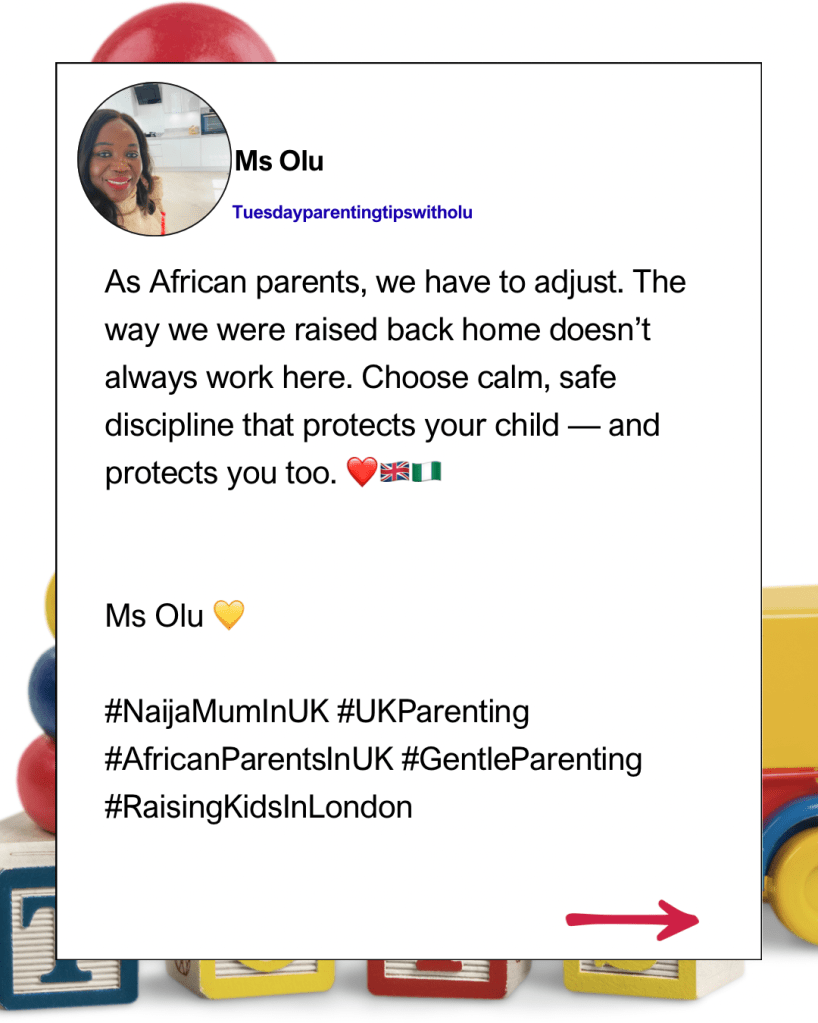
We have to adjust.
The way we were raised back home doesn’t always work here.
Smacking can easily bring unnecessary attention from school or social services.

Choose the peaceful route.
Choose the safe route.
Parent in a way that protects your child — and protects you too.


Ms Olu 💛❤️💛

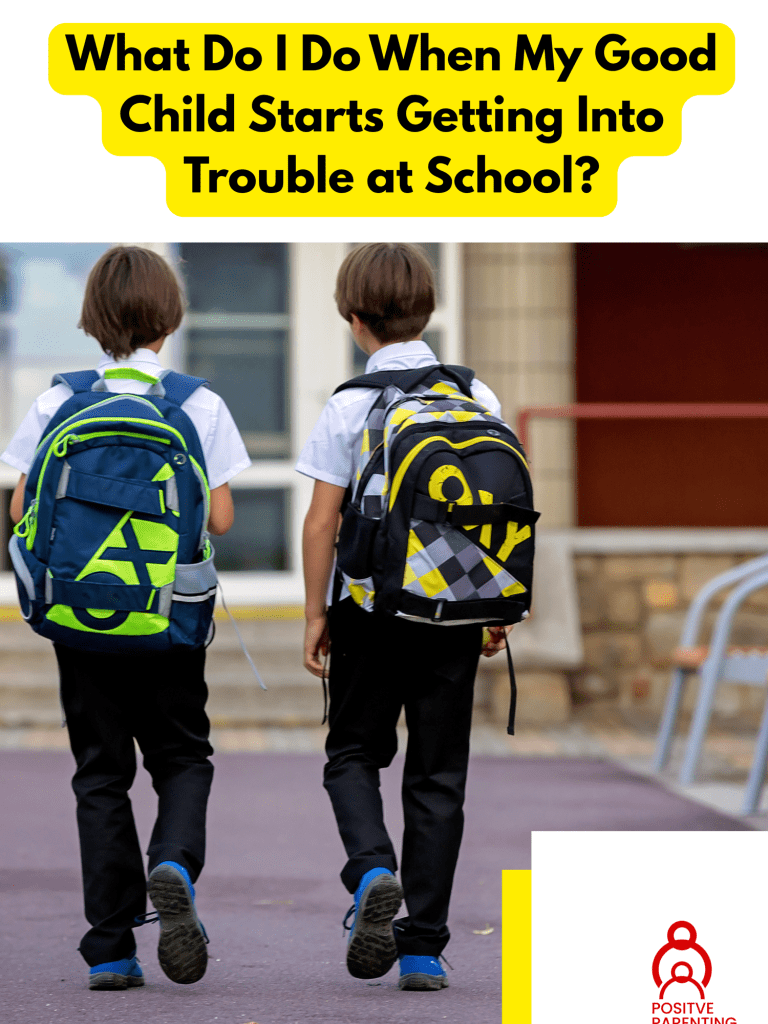
What Do I Do When My Good Child Starts Getting Into Trouble at School?


When a usually well-behaved child suddenly starts getting into trouble, it can be confusing and worrying for any parent. But behaviour changes are often a sign that something deeper is going on.

Here’s what to do:

1. Stay calm.

Don’t overreact. Listen and gather the facts.

2. Talk to your child gently.

Ask open questions like: “What happened?” and “How were you feeling?”

3. Look for triggers.

Common causes include friendship issues, academic struggles, bullying, big emotions, or changes at home.

4. Work with the school.

Ask for details and partner with the teacher to support your child.

5. Teach emotional skills.

Help your child express feelings, solve problems, and calm themselves.

6. Praise good behaviour.

Recognise small improvements to build confidence.

7. Set clear but loving boundaries.

Explain what went wrong and what to do next time.

Remember:
Good children make mistakes too. What matters is guiding them with patience, understanding, and consistency.


Happy parenting 🥰❤️

Ms Olu

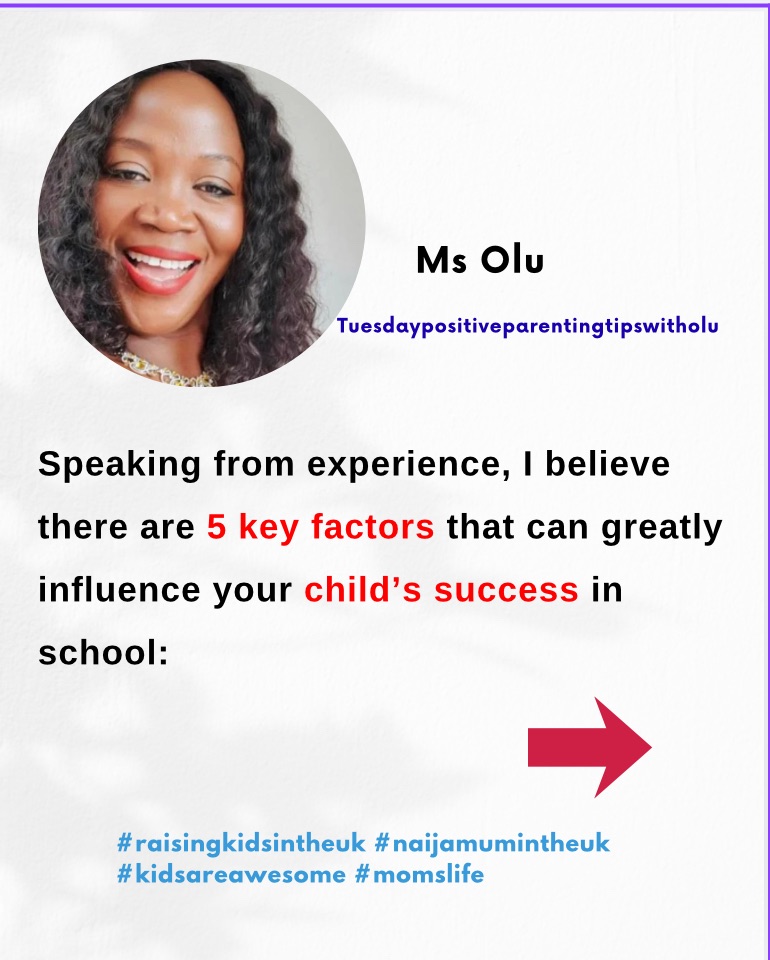
5 key factors that can greatly influence your child’s success in school:

Speaking from experience, I believe there are five key factors that can greatly influence your child’s success in school:

  1. Parental involvement – No matter what school your child attends, your support and encouragement at home make a big difference.
  2. A good school and the right teacher – Finding a school and teacher that understand and bring out the best in your child is essential.
  3. Location matters – Living in an area with good schools can open up better opportunities for your child.
  4. Private tutoring – Getting a good tutor can provide extra support and help strengthen your child’s understanding of key subjects.
  5. Your child’s determination and effort – At the end of the day, your child’s own motivation to learn plays a big role in their success.

Final Thoughts:
Every child’s educational journey is unique, but with the right support system—both at home and in school—they can thrive and reach their full potential. As parents, our role is to guide, encourage, and provide the best environment for them to grow academically and emotionally. Remember, consistency and support go a long way in shaping your child’s future success.

#ParentTips #EducationMatters #SchoolSuccess #ParentingInTheUK #NaijaMumInLondon #RaisingChampions #ParentalInvolvement #UKMums #TutoringSupport #MotivatedLearners #ParentingJourney

Wanting More for My Children: Lessons from a Nigerian Mum Raising Kids in the UK


As a Nigerian mum raising kids in the UK, I’ve come to realise that I want more for my children — not just in terms of material things, but in their education, character, and future opportunities.

If I were to have a baby today, there are so many things I would do differently. Over the years, I’ve learned that parenting in the UK requires being intentional from day one. It’s not enough to simply hope our children will do well — we must actively guide, support, and nurture them.

Here’s what I would do if I were starting again:

1. Start Early

From the day my baby is born, I would make reading part of our daily routine. I would read to him every night — even when he’s too little to understand — because it builds language skills and creates a special bond.

2. Teach at Home

By the time he turns two, I would start teaching him how to read through phonics sounds and basic number counting. I’ve learned that the earlier we expose our children to learning, the more confident they become.

3. Choose the Right School

At age three, I would introduce him to more reading and enrol him in a good prep school. I wouldn’t just put him in any school because it’s nearby — I would do my research. If I couldn’t find a good school in my area, I’d even consider moving to where the best schools are. Education sets the foundation for everything else.

4. Create a Daily Routine

Every day, I would create a simple study routine — time to read, time to play, and time to rest. Children thrive on structure, and consistency helps them develop discipline and good habits.

5. Encourage Curiosity

During school holidays, I would take him to museums, libraries, and places that spark curiosity. I would study him closely — watch what he enjoys, what excites him — and encourage those interests.

6. Be Involved

Throughout his primary and secondary school years, I would stay involved in his education. I’d talk to his teachers regularly, attend school events, and take him to school whenever possible. I want him to know I care about his learning.

7. Teach Kindness and Values

I would teach him kindness — not just by telling him, but by showing him. Children learn more from what we do than what we say. I would be a role model, showing him how to treat others with respect and compassion.

8. Find Mentorship

When he becomes a teenager, I would connect him with a good mentor — someone who can guide him through those challenging years and help him make wise choices as he grows into a young adult.


Why I’m Writing This

I’m writing this to encourage other parents, especially mums like me, to be intentional about how we raise our children.
I’ve realised that we get out of our children what we put into them. If we invest time, love, and effort, we’ll see the results in their confidence, character, and success. But if we don’t put much in, we can’t expect much in return.

So let’s be present. Let’s guide them, nurture their gifts, and show them that they can achieve great things — because when we plant the right seeds early, the harvest will surely come. 🌱


Olu

A Nigerian 🇳🇬 mom and a grandma raising kids in the UK 🇬🇧

Before You Relocate Your Teen Back Home to Nigeria, Please Read This


Please, before you make the decision to relocate your teenager back home to Nigeria because you feel you can’t cope with them — pause for a moment, take a deep breath, and read this. ❤️

I know that raising teenagers abroad, especially here in the UK, can be challenging. Many parents often say, “These kids are too hard to manage,” or “Children abroad don’t listen.” But I beg to differ — that hasn’t been my reality.

My son is now 21, and looking back, I can say with gratitude that our journey wasn’t always easy, but it was worth every bit of patience and understanding.


Parenting Teens Abroad

— A Different Kind of Challenge

Let’s be honest, parenting teenagers anywhere in the world isn’t simple. But when you’re raising children in a completely different culture from where you were raised, the challenge feels bigger.

In Nigeria, we grew up in a culture of “Do as I say, not as I do.” Respect was demanded, not earned. You didn’t question adults, and discipline often came before discussion. But here in the UK, things are different. Teenagers are encouraged to express themselves, question things, and make independent choices — and as parents, that can feel uncomfortable.

I had to learn to unlearn.

I realized that if I tried to raise my son the same way I was raised back home, we would clash constantly. Instead, I had to adapt — to listen more, to understand his world, and to meet him halfway.


What Helped Me

  1. Communication is everything.
    I made sure we talked — even when he didn’t feel like talking. I’d wait for the right moment, maybe while driving or watching a show together. I learned that conversations don’t always have to be formal.
  2. Pick your battles.
    Not everything needs an argument. Sometimes, it’s better to let go of small things and focus on the big picture — their wellbeing, values, and emotional growth.
  3. Be willing to adapt.
    The parenting style that worked for our parents in Nigeria doesn’t always work here. The environment is different, the culture is different, and our children are growing up in a completely new world.
  4. Love them loudly.
    Teenagers may act like they don’t care, but they still need love, reassurance, and patience. Your calm voice can sometimes do more than your anger ever will.

Final Thoughts

Before you decide to send your teen back home, please pause and reflect. Ask yourself — is this decision coming from frustration, or is it truly what’s best for them? Sometimes, all they need is your patience and understanding.

Yes, raising teenagers abroad can be tough, but it’s not impossible. When we adapt, stay open, and show love in a way they understand, we’ll see that they can thrive right where they are.

I’m not saying it’s easy — but I promise you, it’s possible. 💛

— Olu


✨ If you don’t want your children to struggle socially, you need to teach them these 4 skills ✨

So many kids start to struggle with friendships around age 8–10. You’ll see:
😢 Tears
😢 Friendship drama
😢 Self-doubt
😢 “No one likes me…”

Often, it’s not because they’re “unlikeable” — it’s because no one ever taught them the basics of being a good friend.

👉 Teach your child to:

  1. Listen as well as talk
  2. Take turns in conversations
  3. Be kind and respectful outside the home
  4. Handle disagreements without being mean

These simple skills make such a difference in helping your child feel confident and connected. 💕

We’re now on Instagram! 🎉 Follow us 👆for updates, educational tips, and more!

Visit 👉 brighter-bee-learning

How Do I Make School Life Easy for My Child?

Everything starts at home!

The other day, I was talking to a colleague of mine about children and how differently they experience school. Some children seem to find learning easy and excel, while others struggle and fall behind.

From my experience working with kids, I’ve noticed a clear pattern: children whose parents take the time to support them at home tend to do much better in school.

It doesn’t have to mean hours of tutoring or expensive resources. Sometimes, the little things make the biggest difference—
✅ Reading together for just 15 minutes a day
✅ Practicing spellings, times tables, or simple sums at home
✅ Asking them about their day and encouraging them to explain what they’ve learned
✅ Creating a quiet, distraction-free space for homework
✅ Praising effort, not just results

When children see that learning is part of everyday life at home, they approach school with more confidence and motivation. Parents are a child’s first teachers, and our involvement makes their journey through school much easier.

👉 So if you’ve ever wondered how to make school life easier for your child, start at home. Be present, be consistent, and let your child know that learning is a team effort.

I hope this helps and I hope you will take action after reading today’s post.

Your child will thank you later

Olu ❤️❤️❤️